
Bats are vital to healthy ecosystems and human economies worldwide. As primary predators of night-flying insects, bats consume enormous quantities of agricultural pests and reduce the need for chemical pesticides.

Yet these wonderfully diverse and beneficial creatures are among the least studied and most misunderstood of animals. Bats are threatened worldwide, and their colonies and habitats are destroyed - both intentionally and inadvertently - because of myths, misinformation, and lack of scientific knowledge and understanding. Bat populations are declining almost everywhere in North America especially due to the devastating White-nose Syndrome. Losing bats has far-reaching consequences for natural ecosystems and human economies. Knowledge is the key to their conservation and protection.

BatsLIVE: A Distance Learning Adventure is an exciting, free education program for children in the 4-8th grades and their educators, that will bring bat conservation to life in your classroom or community.

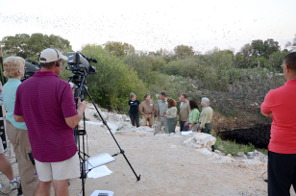
Also, a free live webcast will be held from Bracken Bat Cave in Texas on Sept. 18 from 7 – 8:30 p.m. ET.  With millions of Mexican free-tailed bats living in the cave from March through October, Bracken holds one of the largest concentrations of mammals on earth.  CLICK HERE for more information.

Join us to:

  • Participate in a LIVE WEBCAST for students on May 17 from 1 to 2 p.m. Eastern Time (Noon-1 p.m. CT; 11 a.m.-Noon MT; 10-11 a.m. PT; and 9-10 a.m. AT).
  • To watch a test stream of the webcast and check your equipment, CLICK HERE. Adobe Flash Player is required to view this webcast. If you need Flash, CLICK HERE. If you want to watch the program on an iPad or iPhone, you will need a third-party application.
  • Participate in a WEB SEMINAR for teachers, non-formal educators, and others on October 11. CLICK HERE for an archive of the "Bat Basics" webinar held on April 18.
  • Join in CITIZEN SCIENCE activities involving bats in your state.
  • Check out all the FREE RESOURCES on this web site.
  • Connect to the LEADING BAT CONSERVATION ORGANIZATIONS in the world.
  • CLICK HERE for a flyer about BatsLIVE.
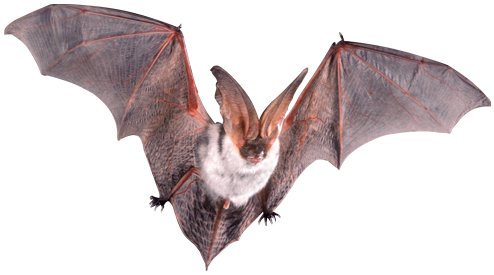
Spotted Bat
Photo © Merlin D. Tuttle
Bat Conservation International

What's New

National Public Radio recently reported on the spread of White-Nose Syndrome to Missouri.  More »

Watch the webinar conducted in January 2012 about the national White-Nose Syndrome response and learn about the most up-to-date guidance and techniques for winter WNS survey and data collection. More »

Bat Conservation International reports that the newly released federal budget for 2012 contains good news for bats. Congress is directing the U.S. Fish and Wildlife Service to spend $4 million for the fight against White-nose Syndrome, the rapidly spreading disease that has killed millions of bats across eastern North America since 2006. More »

Rolf Muller, associate professor of mechanical engineering at Virginia Tech, found that certain bats, such as the horseshoe bat, alter the shape of their entire outer ears in the space of milliseconds, to better "hear" the sound waves bouncing off objects and prey. More »

Text 242-242 or visit ChaCha at http://www.chacha.com/ for answers to your questions about bats! More »

Watch Bats! produced by Georgia Outdoors and Georgia Public Broadcasting, which puts viewers face to face with bats, and their incredible wing structure. They are the only mammal that can fly, but we also explore a mysterious disease that's taking them down by the thousands. More »


Partner News

Check out the new Night Friends: Bats of the Americas online activity guide for students in kindergarten through grade 8 from the National Wildlife Federation and Bat Conservation International.  CLICK HERE for a pdf file.

Check out one of these upcoming festivals celebrating bats:

2012 is being observed as the Year of the Bat. Education regarding the essential roles of bats in maintaining healthy ecosystems and human economies has never been more important. Bats are found nearly everywhere and approximately 1,200 species account for almost a quarter of all mammals. Nevertheless, in recent decades their populations have declined alarmingly. Many are now endangered, though they provide invaluable services that we cannot afford to lose. More »

Check out the new video on YouTube posted by the Lubee Bat Conservancy. More »

Check out the Welcome to the Underground curriculum from the Bureau of Land Management. How do bat mothers find their pups in dark caves? More »